


As 2025 came to a close, Shopify rolled out a series of important platform updates throughout Q4, culminating in December changes that directly impact how merchants track performance, run promotions, and scale paid acquisition.
These updates reflect Shopify’s continued focus on automation, advanced analytics, and tighter integrations across the commerce stack.
For marketers and PPC managers, these changes matter more than ever. Shopify’s evolving analytics, discount logic, and API infrastructure influence how conversions are tracked, how campaigns are optimized, and how efficiently ad budgets are spent across Google, Meta, and other paid channels.
Table of Contents
The Core Challenge for Marketers and PPC Teams
The main challenge in Q4 2025 wasn’t a lack of features — it was keeping up with how fast Shopify is evolving and understanding which updates actually impact revenue and performance.
Many teams struggle with:
Attribution gaps caused by outdated or incomplete conversion tracking
Disconnects between promotions and ads, leading to confusing customer experiences
Technical changes under the hood (APIs, discount logic, inventory rules) that silently affect marketing performance
Delayed adoption of new analytics tools, resulting in slower optimization cycles
Ignoring these changes can be costly.
Poor tracking leads to incorrect bidding decisions, inefficient spend, and lower ROAS — especially during high-traffic periods like Black Friday, Cyber Monday, and holiday sales.
Strategy for Shopify Q4 2025 Updates
To get real value from Shopify’s Q4 2025 updates, marketers and PPC managers need a structured approach rather than reacting feature by feature.

Re-Audit Conversion Tracking and Attribution
One of the most important Q4 updates was the expansion of conversion and engagement data available through Shopify’s marketing and analytics infrastructure.
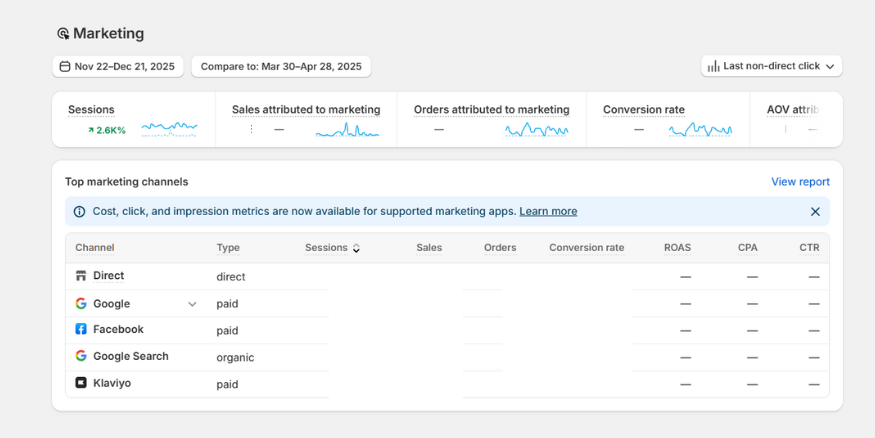
This directly affects how purchase events, checkout steps, and engagement signals are passed into ad platforms.
What to do:
Review your Shopify → Google Ads and Meta Ads integrations
Confirm that key funnel events (view content, add to cart, checkout, purchase) are firing correctly
Align attribution windows between Shopify analytics and ad platforms
Why it matters: better attribution means smarter bidding, cleaner reporting, and more confidence when scaling campaigns.
Align Promotions, Discounts, and Paid Campaigns
Shopify introduced more flexible discount logic in late 2025, allowing merchants to better control how promotions stack and when discounts should be rejected or applied.

For marketers, this means:
Campaign messaging must accurately reflect real checkout behavior
PPC creatives should match actual discount rules (no “surprise” at checkout)
Promo-driven campaigns can now be cleaner and more predictable
Use dedicated landing pages for major promotions and test them against standard product pages to measure lift in conversion rate and AOV.
Use Better Inventory & Fulfillment Signals for Ads
Q4 updates also improved how Shopify handles inventory, refunds, and fulfillment data through APIs.
While this sounds technical, it has a real marketing impact.
Why PPC teams should care:
More accurate inventory data improves dynamic product ads
Reduced risk of advertising out-of-stock items
Better alignment between fulfillment promises and ad messaging (delivery speed, availability)
When inventory data is accurate, ads perform better — especially during peak seasonal demand.
Start Testing AI-Driven Insights (Without Relying on Them Blindly)
Shopify’s Winter Edition rollout at the end of 2025 expanded AI-assisted features such as insights, recommendations, and workflow suggestions. While these tools aren’t a replacement for strategy, they can speed up analysis and ideation.
Best practice:
Use AI insights as a starting point, not a final decision
Compare AI recommendations against historical campaign data
Test changes incrementally before rolling them out at scale
PPC Performance After Q4 Updates
One of our mid-size Shopify clients, actively running both Google Ads and Meta Ads, used Q4 2025 as an opportunity to clean up their tracking and promotional logic following Shopify’s latest platform updates.
Before the changes, the client faced common challenges: inconsistent conversion data between platforms, promotional messaging that didn’t always match checkout behavior, and limited visibility into which campaigns were truly driving revenue.
What We Implemented
After reviewing Shopify’s Q4 2025 updates, our team focused on three key improvements:
Updated conversion tracking: we audited and refreshed Shopify-to-ad-platform integrations to ensure that purchase, checkout, and engagement events were firing correctly and consistently across Google and Meta.
Aligned promotions with Shopify’s new discount logic: discount rules were restructured so that promo codes behaved exactly as advertised in paid campaigns, eliminating confusion at checkout.
Improved data alignment between ads and on-site experience: сampaign messaging, landing pages, and checkout flows were aligned using the updated Shopify data structure to create a seamless customer journey.
Results After 6 Weeks
After implementing these changes, the client saw measurable improvements across both performance and reporting:
Conversion rate increased from 2.8% to 3.6%
Cost per conversion decreased by 18%
Attribution accuracy improved significantly across Google Ads and Meta Ads
Average order value increased, driven by clearer and more predictable promotional rules
Key Insight
The biggest win for our client wasn’t a single Shopify feature or tool. It was the alignment between Shopify data, paid advertising platforms, and the on-site user experience.
We live, breathe & Dream Paid Traffic
Summary
Shopify’s Q4 2025 updates affect how you track conversions, measure results, and run PPC campaigns. Changes in analytics, discounts, and backend systems can change how your ads perform, so it’s important to stay on top of them.
After any update, checking your conversion tracking should be a priority. Even small issues can make your ad data inaccurate, which can lead to wasted spend or wrong decisions. Making sure everything is set up correctly keeps your campaigns running smoothly.
It’s also important to make sure your discount rules match your ad campaigns. If customers see something different in the ad or at checkout, it can confuse them and hurt conversions. Clear and consistent promotions help your ads work better and improve the shopping experience.
Better inventory and fulfillment information also makes a difference. Ads that show accurate stock and delivery times prevent wasted spend and make customers more confident in buying.
Shopify’s AI tools can help with insights and suggestions, but they shouldn’t replace your judgment. Human oversight is still needed to make smart marketing decisions and plan long-term strategies.
Finally, avoid common mistakes. Don’t assume your old tracking still works, always check that promo codes behave as expected, and pay attention to backend changes that could affect the site or your campaigns. Small oversights here can have big impacts on performance.
SUBSCRIBE TO OUR PPC NEWSLETTER
Get PPC Tips That Help Break Sales Records
"I can't give enough gratitude to the team of Search Scientists. Thanks to their insights and education I am able to destroy even big box stores in my Google Ads Campaigns!"
-Ognyan Stanoev
Search Scientists is committed to protecting your privacy. See our Privacy Policy.
Master PPC with our latest YouTube tutorials
Follow us for daily updates and marketing tips
You might also like
Want to get paid for traffic? Request a proposal to get started.
Let’s do a deep dive into your current account(s).